
: The Forgotten Blues King Who Brought Jack Reacher to Georgia
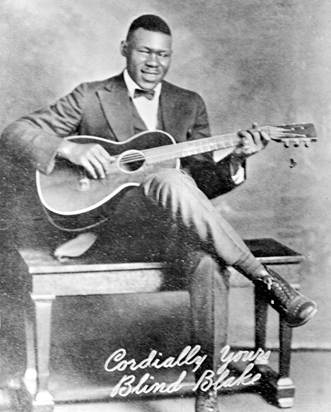
Nearly a century after his recordings, a mysterious guitarist became the reason a fictional drifter stepped off a bus and walked into trouble.
Imagine being so good at playing the guitar that nearly a hundred years after your death, a television character travels across Georgia just to learn more about you.
That’s the curious connection between Blind Blake, one of the greatest guitarists of the early blues era, and Jack Reacher, the wandering hero created by author Lee Child.
If you’ve watched the first season of Reacher, you might remember that Reacher arrives in the fictional town of Margrave, Georgia, because of his interest in an old blues musician named Blind Blake.
And that small musical detail opens the door to one remarkable story.
Because Blind Blake was no ordinary guitar player.
He was a musical magician with six strings, a mysterious past, and a sound that helped shape American blues.
🎸 The Man Who Made One Guitar Sound Like Two
Blind Blake, born Arthur Blake around 1896, was a master of the fingerpicking style associated with Piedmont blues.
Unlike the heavier, often rawer sound associated with Delta blues, Piedmont blues incorporated the bouncing rhythms of ragtime piano.
Blake took that approach to astonishing heights.
His thumb maintained a steady, alternating bass line while his fingers played intricate melodies above it. The result could sound like two musicians performing at once.
One part kept the rhythm moving. The other danced around it.
And somehow, Blake made the whole thing sound effortless.
Listen to his 1926 recording “West Coast Blues,” and you’ll hear why guitarists still study his playing.
His fingers weren’t simply picking notes. They were creating an entire little orchestra.
💿 The King of Ragtime Guitar
During the late 1920s, Blind Blake became one of Paramount Records’ most successful blues performers.
Between 1926 and 1932, he recorded roughly 80 sides, an impressive achievement for a Black blues musician working in an era when recording opportunities were limited and the industry was deeply segregated.
His recordings included “West Coast Blues,” “Early Morning Blues,” “Diddie Wa Diddie,” “Southern Rag,” and “Police Dog Blues.”
He also accompanied other important blues artists, including Ma Rainey and Gus Cannon.
What made Blake unusual was his extraordinary combination of technical skill, humor, and rhythm.
His playing could be playful, sophisticated, and downright infectious.
The blues didn’t always have to sound mournful. Sometimes it could make you grin, tap your feet, and wonder how one man’s fingers could possibly move that fast.
🕵️ A Mystery Even Jack Reacher Couldn’t Easily Solve
Here’s where the story gets especially interesting.
For decades, researchers knew surprisingly little about Blind Blake.
His birthplace was uncertain. His real name was disputed. Even the date and circumstances of his death remained a mystery.
Some early accounts identified him as Arthur Phelps and placed his death around 1933.
But in 2011, blues researchers published newly uncovered historical documents, including a death certificate.
The evidence established that Arthur Blake died in Milwaukee, Wisconsin, on December 1, 1934, at approximately 38 years old.
The documents also identified Newport News, Virginia, as his birthplace, although details of his early life remain uncertain.
For a musician whose recordings had influenced generations of guitarists, it was astonishing how much of the man himself had vanished from the historical record.
He left behind music that could fill a room, but only fragments of a personal biography.
📺 The Bluesman Who Sent Reacher Walking
In Lee Child’s first Jack Reacher novel, Killing Floor, and its television adaptation, Reacher’s fascination with Blind Blake helps explain his arrival in Margrave, Georgia.
Reacher has heard that the old bluesman may have died in the area, and he wants to follow the trail.
Instead, he walks into a murder investigation.
It’s a clever fictional setup, but it also reflects something true about early blues history: musicians traveled constantly, records preserved their performances, and the details of their lives often became tangled in rumor.
In the real world, Blake’s death certificate places his final days in Milwaukee, not the fictional Georgia town.
But Reacher’s curiosity makes perfect sense.
Once you’ve heard Blind Blake play, you might want to know everything about the man behind that guitar.
🎶 The Sound That Refused to Disappear
Blind Blake’s influence extended well beyond the handful of years he spent recording.
His ragtime-influenced fingerpicking helped establish a standard for later Piedmont blues guitarists.
Musicians including Reverend Gary Davis and Blind Boy Fuller carried related traditions forward. Decades later, acoustic guitarists continued studying Blake’s recordings, trying to unravel his remarkable technique.
Jorma Kaukonen, known for his work with Jefferson Airplane and Hot Tuna, also helped introduce Blake’s music to later rock and blues audiences through performances of songs such as “Police Dog Blues.”
That’s how musical history survives.
One generation learns from another, even when the teacher has been gone for decades.
The original records might crackle and hiss, but the genius comes through loud and clear.
💙 The Blues Never Really Dies
Blind Blake never lived to see television, streaming music, or a fictional giant named Jack Reacher wandering through Georgia in search of his story.
He couldn’t have imagined that his recordings would still fascinate listeners nearly a century later.
But that’s the beauty of the blues.
The musicians may disappear. The old recording companies may close their doors. The details of a life may become buried beneath decades of forgotten history.
Yet the music keeps traveling.
And sometimes, all it takes is a fictional character mentioning an old guitar player to send somebody searching for the real thing.
So if Blind Blake is a name you’ve never explored, start with “West Coast Blues” or “Police Dog Blues.”
Turn up the volume.
Listen to that thumb keeping time while the fingers dance above it.
And remember that you’re hearing one man, one guitar, and a whole lot of musical history.
The record is spinning. Let’s see where it takes us. 💿🎶
Sources & Further Reading
- AllMusic: Blind Blake Biography
His recording career, signature songs, and importance to ragtime guitar. - KUNC: Blind Blake Is Something of a Mystery, His Mastery of the Guitar Is Not
Background on his guitar technique and the rediscovery of his death certificate. - Blues & Rhythm: In Search of Blind Blake
Historical research that helped establish his identity and final years. - Amoeba Music: Blind Blake Biography
His recordings, collaborators, and place in early American blues.
Suggested category: Blues
Series: Rediscovery


Leave a Reply