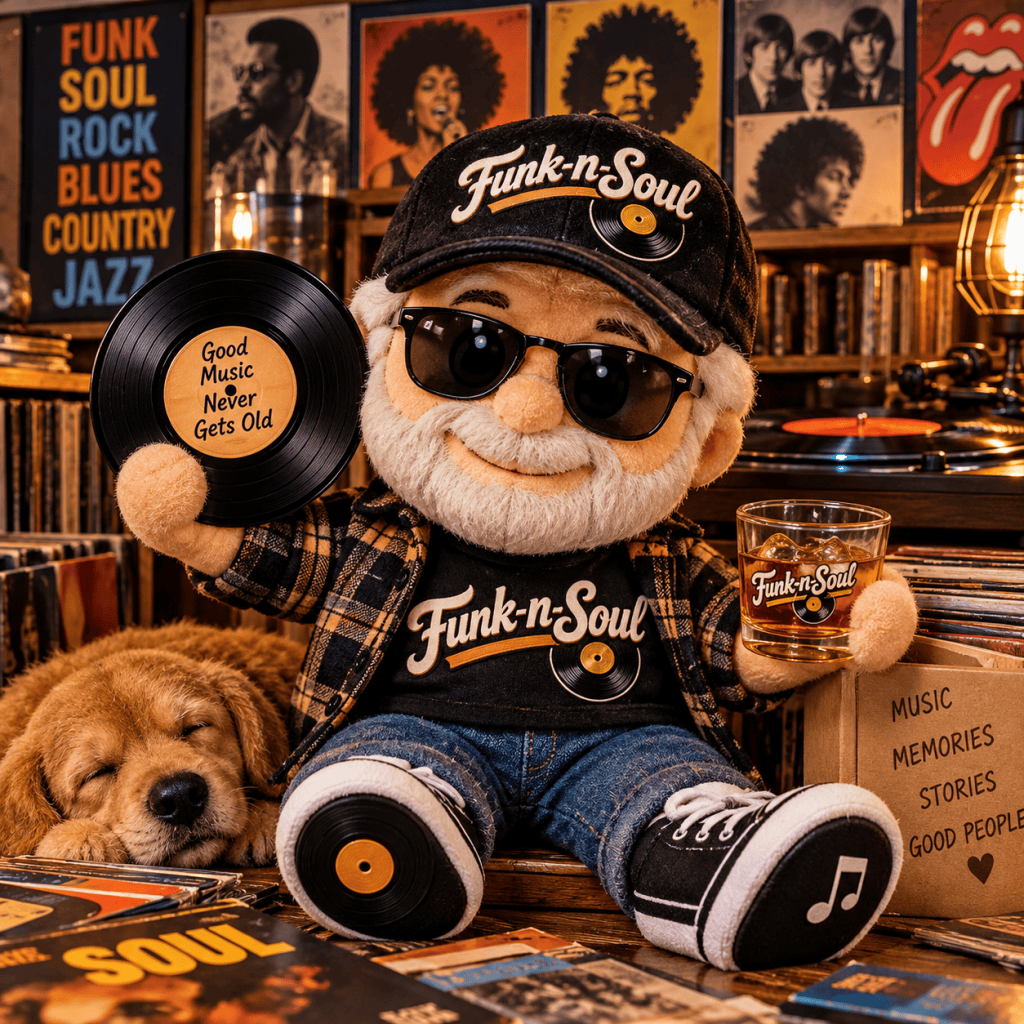
The Rock Band That Learned to Dance
How Wild Cherry turned a nightclub heckle into a No. 1 hit, crossed musical boundaries, and gave the world a funk-rock anthem
Sometimes a hit song begins with a brilliant songwriter sitting at a piano.
Sometimes it starts with a guitar riff that won’t leave somebody alone.
And sometimes, a band is just trying to make a living playing rock and roll when somebody in the audience basically tells them to get with the program.
That’s what happened to Wild Cherry.
In the mid-1970s, these hard-rocking musicians were playing clubs around Pittsburgh, serving up the sounds of Led Zeppelin, Kiss, and Foghat. But the musical world was changing. Disco was taking over dance floors, and audiences wanted music that moved their feet.
Wild Cherry had a problem.
They wanted to rock.
The crowd wanted funk.
And one audience member had a suggestion that would change the band’s life.
“Play that funky music, white boy!”
A few words. A frustrated band. A songwriter with a pen.
And suddenly, rock and funk were about to have one unforgettable night together.
Before the Funk: Wild Cherry Wanted to Rock
Wild Cherry grew out of the Ohio Valley music scene, with frontman Rob Parissi leading the group through its early years as a hard-rock cover band.
The band worked the club circuit, playing the songs that filled jukeboxes and brought people out for a night of loud guitars.
But by the mid-1970s, the disco era was in full swing.
Dance clubs were expanding, disco records were dominating the airwaves, and club owners wanted music that kept people on the floor.
Wild Cherry found itself performing at Pittsburgh-area venues where the audience wasn’t particularly interested in hearing another hard-rock set.
At the 2001 Club in Pittsburgh, the band encountered a crowd that wanted something different.
The musicians were playing rock.
The audience wanted funk.
And the message eventually came through loud and clear.
The Heckle Heard Around the Dance Floor
The story has been told in slightly different ways over the years, but the central moment is consistent.
Someone in the audience challenged the band to play funky music. Drummer Ron Beitle brought the remark backstage, where the musicians were discussing their future.
Parissi recognized that the phrase had something to it.
It wasn’t just a complaint. It was a title.
According to band accounts, Parissi grabbed a pen and a drink-order pad and began writing.
The idea came together quickly. The band had been thinking about changing direction, and now it had a phrase that captured the entire situation.
They were rock musicians being told to play funk.
Rather than ignore the audience, Parissi turned the challenge into a song.
The result was “Play That Funky Music.”
One of the great dance-floor anthems of the 1970s was born out of a band trying to figure out how to keep its career alive.
Sometimes inspiration arrives wearing a smile.
Sometimes it arrives from the audience with a little attitude.
The Riff That Made It Move
A memorable title can get a songwriter started, but it takes music to make a hit.
Guitarist Bryan Bassett helped supply the song’s signature riff, a blues-based, octave-driven figure that gives the track its instantly recognizable opening.
The guitar doesn’t simply announce the song. It establishes the groove.
Then the bass locks in, the drums drive forward, and the horns add sharp punches that make the arrangement feel bigger and more celebratory.
The song carries the weight of rock guitar but the rhythmic insistence of funk and disco.
That’s the secret.
Wild Cherry didn’t abandon rock and pretend it had never existed. The band took its guitar-driven sound and reshaped it around a danceable rhythm.
The guitar could still bite.
The drums could still hit hard.
But now the whole arrangement had a groove that invited people onto the floor.
Parissi’s vocal performance added another ingredient. He moved between sung lines, spoken phrases, and rhythmic ad-libs, riding the beat rather than simply singing over it.
The result was a record that could satisfy rock fans and disco crowds without sounding like it belonged entirely to either camp.
It was funk with a rocker’s grin.
The Song Almost Took the Back Seat
Here’s another twist.
Parissi initially considered “Play That Funky Music” as the B-side to a cover of the Commodores’ song “I Feel Sanctified.”
That would have made the eventual hit the song that record buyers might never have heard unless they flipped the single over.
But record executive Carl Maduri recognized the potential of the original song, and it became the A-side.
That decision changed everything.
Released in 1976, “Play That Funky Music” climbed the charts and eventually reached No. 1 on both the Billboard Hot 100 and the soul singles chart.
Wild Cherry had gone from struggling club musicians to the band behind one of the biggest hits of the year.
And the song’s central joke had become its greatest strength.
A rock band was being told to play funky music.
So it did.
And millions of people joined the audience.
A White Rock Band, a Black Musical Tradition, and a Changing Sound
There’s an important part of this story that deserves more than a passing mention.
Funk and disco emerged from rich Black musical traditions. Artists such as James Brown, Sly and the Family Stone, Parliament-Funkadelic, the Ohio Players, and the Commodores had helped develop the sounds that were reshaping popular music.
Wild Cherry was entering a musical landscape that these artists had already helped build.
The band wasn’t inventing funk. It was responding to the sound that audiences wanted and adapting its rock background to it.
That distinction matters.
The song’s title reflects the racial dynamics of the moment, as a white band was being challenged to play music associated with a Black musical tradition. The phrase became a memorable hook, but the larger story is about musicians crossing genre lines and learning from the musical culture around them.
Wild Cherry’s success showed how much room there was for rock, funk, and disco to meet.
And it helped bring that blend to a massive pop audience.
From Pittsburgh Clubs to the Top of the Charts
By September 1976, “Play That Funky Music” had reached No. 1 on the Billboard Hot 100.
It also topped the soul singles chart, demonstrating that the song’s appeal crossed the usual boundaries between rock and R&B.
The single became Wild Cherry’s signature recording. The band received major industry recognition, including Grammy nominations, and the self-titled debut album helped establish the group as a major act of the disco era.
But success also created an unusual problem.
How do you follow a song that becomes part of the musical vocabulary of an entire generation?
Wild Cherry released more music, including “Baby Don’t You Know” and “Hot to Trot,” but it never matched the enormous impact of its breakthrough hit.
The band became one of those acts forever associated with one defining record.
Still, what a record to have attached to your name.
The Groove That Wouldn’t Go Away
“Play That Funky Music” has lived many musical lives since 1976.
It became a staple of classic-rock radio, dance parties, weddings, sporting events, and just about any gathering where somebody wanted to get a crowd moving.
Its hook is so recognizable that a few seconds can be enough to identify it.
The song has also been covered, performed, parodied, and rediscovered by new generations.
In 1988, rock guitarist and singer David Lee Roth released a version that brought the song into another era of mainstream rock.
The original, though, remains the definitive statement of Wild Cherry’s sound: chunky guitar, a locked-in rhythm section, horns that punch through the arrangement, and a chorus that practically commands the room.
The song’s staying power comes from its simplicity.
The groove doesn’t need to explain itself.
It just works.
The Beautiful Irony of It All
Think about the journey.
Wild Cherry started as a hard-rock band.
The disco era made its usual approach less useful in some of the clubs where it worked.
An audience member complained.
The band listened.
Rob Parissi turned the remark into a song.
Bryan Bassett helped create the riff.
A record executive recognized the potential of the track.
And the song went to No. 1.
The band didn’t become famous by stubbornly refusing to change. It found a way to carry its own musical identity into a new sound.
That is a lesson worth remembering.
Sometimes an audience tells you what it wants.
Sometimes you don’t like hearing it.
And sometimes, if you listen carefully enough, the complaint contains the seed of your biggest success.
Wild Cherry heard the request.
Then it turned the request into a groove that has lasted for half a century.
One Last Spin
“Play That Funky Music” is more than a catchy title and a killer riff.
It’s a snapshot of a musical moment when rock, funk, and disco were colliding, influencing one another, and changing the sound of popular music.
It tells the story of a working band willing to adapt, a songwriter who recognized an opportunity, and a groove that proved strong enough to cross genres and generations.
And it reminds us that sometimes the greatest musical discoveries don’t happen in a recording studio.
They happen in a club, with a frustrated crowd, a band trying to figure things out, and somebody brave enough to shout what everybody else is thinking.
So here’s to Rob Parissi, Bryan Bassett, Ron Beitle, Allen Wentz, and the musicians who turned that moment into a classic.
The next time the song comes on, don’t just tap your foot.
Get up.
Move around.
Let the bass do its work.
And remember the band that was told to play funky music and decided to make history instead.
The record is spinning. Let’s see where it takes us. 💿🎶
Sources & Further Listening


Leave a Reply