Bruce Springsteen, “Born to Run,” and why some songs mean more at 60 than they did at 20
There’s a funny thing about getting older.
The songs don’t get older with us.
We do.
The record stays exactly the same.
Same words.
Same melody.
Same guitar.
Same voice captured in the grooves.
But then one day, you hear a song you haven’t really listened to in years, and suddenly there’s something in it you never heard before.
That’s the strange magic Bruce Springsteen was talking about when he said:
“A good song gathers the years in.”
He was explaining why he could still sing “Born to Run” with conviction more than 40 years after writing it.
And then he said something even more revealing:
“A good song takes on more meaning as the years pass by.”
That isn’t just a comment about songwriting.
It’s a pretty good description of getting older.
He Was Only 24
When Springsteen wrote “Born to Run,” he was 24 years old.
He wasn’t looking backward.
He was looking forward.
The song was filled with youth, movement, desire, cars, highways, escape and the feeling that somewhere beyond the next exit was a life waiting to begin.
Springsteen spent about six months assembling the song, which he regarded as an important work from the beginning.
At 24, those words meant one thing.
Get out.
Get moving.
Don’t get trapped.
Find the road.
Find the girl.
Find the life.
Run toward whatever comes next.
And then something happened.
Springsteen kept living.
The Song Stayed the Same
Forty years later, Springsteen was still putting “Born to Run” near the end of his concerts.
Not because he was obligated to.
He called it “still at the center of my work.”
He described its appearance in the show as monumental.
But the man singing it wasn’t 24 anymore.
Neither were the people listening.
That’s where the song gets interesting.
Because eventually, the person who once heard “Born to Run” as a declaration of escape may hear it as something else.
Maybe it’s about the years that actually passed.
Maybe it’s about the places you left behind.
Maybe it’s about the people who came along.
Maybe it’s about the people who didn’t.
The song didn’t change.
The listener did.
That’s What Time Does to Music
Think about the songs you loved when you were young.
You probably didn’t hear them the same way you hear them now.
A love song at 20 can sound completely different at 60.
A song about freedom can sound different after you’ve spent decades building a life.
A song about leaving home can hit differently when the people you left behind are gone.
A song you once danced to can suddenly become a memory of somebody who isn’t around anymore.
The words haven’t moved an inch.
But you’ve accumulated four decades of life around them.
That’s what Springsteen meant by “gathers the years in.”
The Song Becomes a Time Machine
That’s one reason certain records seem almost impossible to throw away.
You don’t just remember the song.
You remember yourself listening to it.
Where you were.
Who you were with.
What car you were driving.
What apartment you lived in.
Who you loved.
Who broke your heart.
Who was sitting beside you.
What you thought your life was going to become.
A three-minute song can carry an astonishing amount of luggage.
And unlike most luggage, it doesn’t get heavier.
It gets deeper.
At 24, You Hear the Future
When you’re young, music often points forward.
What’s next?
Where am I going?
Who am I going to become?
What am I going to do?
That’s part of what makes “Born to Run” so powerful.
It sounds like motion.
The whole thing feels like it’s trying to escape the speakers.
But eventually, we reach an age where we’re not just looking at what’s ahead.
We’re looking over our shoulder, too.
And that’s when the same song can reveal another layer.
The road isn’t only about getting away.
It’s also about remembering where you’ve been.
And That’s Where the Years Get Into the Song
Springsteen said something else in that 2016 interview that fits this idea beautifully.
He watched audiences sing “Born to Run” word for word.
The song had connected with them.
And it had developed a life beyond the moment when he originally wrote it.
That’s the secret.
A songwriter can write the song.
But eventually, the listeners become part of it.
Their memories attach themselves to the words.
Their lives become part of the music.
The song grows because we grow.
Maybe That’s Why Some Songs Never Get Old
There are songs you can hear a hundred times and never really get tired of.
Not because they’re frozen in time.
Because they’re not.
You change.
Your circumstances change.
Your understanding changes.
And the song keeps waiting for you.
You hear it at 25.
Then again at 40.
Then 60.
Maybe 70.
And each time, another little piece of the song makes sense.
It’s almost like the record has been sitting there patiently while you’ve been out living long enough to understand it.
The Music Didn’t Change
That’s the beautiful part.
We sometimes say an old song has “aged well.”
Maybe that’s not quite right.
Maybe we finally caught up to it.
The song was always there.
The meaning was always there.
We simply hadn’t lived enough yet to hear all of it.
A heartbreak song needs heartbreak.
A song about loss needs loss.
A song about leaving needs somewhere you’ve been.
A song about time needs time.
And eventually, life supplies the missing pieces.
What Does “Born to Run” Mean Now?
That’s the question I think is more interesting than asking what Bruce Springsteen intended when he wrote it.
Because there isn’t necessarily one answer.
At 24, you might hear escape.
At 40, you might hear ambition.
At 60, you might hear memory.
At 70, maybe you hear the entire road.
And somebody else will hear something completely different.
That’s the beauty of a great song.
It leaves room for you.
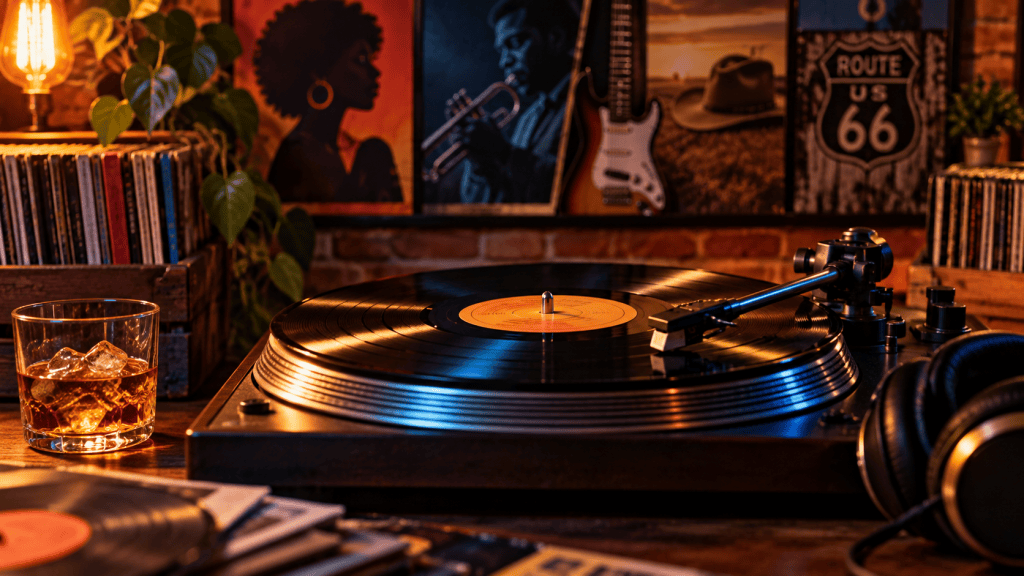
The Vinyl & Whiskey Test
This is why I love the idea behind Springsteen’s quote.
Put an old record on.
Pour something if that’s your thing.
Sit back.
And listen to a song you haven’t heard in years.
Don’t listen to it as the person who first heard it.
Listen to it as the person you’ve become.
Then ask yourself:
What does this song mean to me now?
That answer might surprise you.
Because sometimes the song hasn’t changed at all.
You’ve changed.
And that’s where the new meaning comes from.
The Record Is Still Spinning
Bruce Springsteen wrote “Born to Run” when he was 24.
More than four decades later, he could still stand on a stage and sing it with conviction.
That’s because the song had traveled with him.
It had gathered the years.
And so had everyone listening.
That’s what music does at its best.
It doesn’t simply preserve the past.
It lets the past meet the person you’ve become.
The song you loved at 20 can become the song that understands you at 60.
The record stays the same.
But every time you drop the needle, you bring another lifetime to it.
And maybe that’s why some songs never grow old.
They just keep finding new ways to mean something.
The record is spinning. Let’s see where it takes us. 💿🎶
Sources
Vanity Fair
David Kamp’s 2016 interview with Bruce Springsteen, including Springsteen’s discussion of “Born to Run” and why good songs gather meaning over time.
The Guardian
2016 interview coverage of Springsteen’s comments about “Born to Run” and the way songs grow with their listeners.
Forbes
Coverage of Springsteen’s 2016 memoir and his comments about the enduring meaning of “Born to Run.”


Leave a comment